
Solitude and Orphanhood
La piel del tamborThis flow traces the different forms of abandonment experienced by Quart, Gris, Macarena, and Ferro, and the tentative companionship they find in chosen causes.
increasing Bearing strength in each event
 decreasing
Bearing strength in each eventdecreasingQuart’s Early Orphanhood
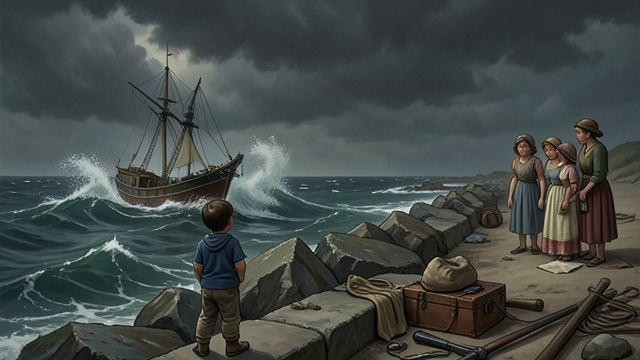
Quart’s Early Orphanhood
A child without a return
Quart loses his fisherman father and watches other families wait for boats. The uncertainty of that childhood teaches him that love and prayer cannot guarantee someone’s return.
Solitude as protection
He resolves that no one will wait for him on the breakwater. Later, discipline and professional work become ways of maintaining distance from dependence.
Gris’s Lost Self
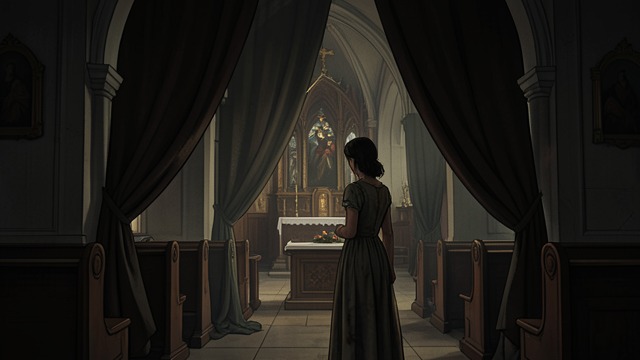
Gris’s Lost Self
A life not chosen
Gris looks back on a vocation shaped by fear of disappointing her father and by rules she accepted before understanding their cost. Her attachment to the bishop reveals how little room she has allowed herself for desire.
Seeking a cause
In Seville she finds work restoring the church and a practical reason to remain. The chosen cause gives her a provisional home without resolving the loss of a life she never lived.
Macarena’s Inherited Isolation
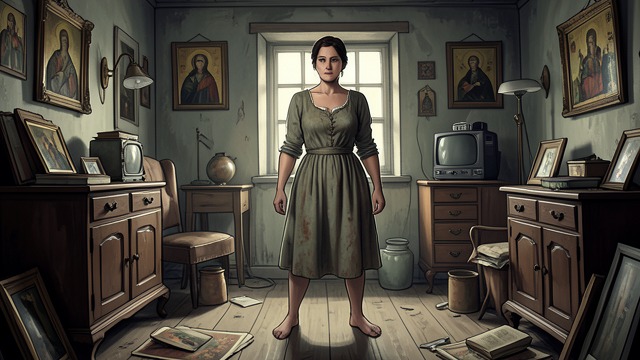
Macarena’s Inherited Isolation
A home full of ghosts
Macarena returns to a family house crowded with memories and objects, yet feels a gap between her feet and the abyss. Her inability to have children deepens her fear that nothing will continue after her.
A defense of memory
She clings to Carlota’s story and the church, not because the past can be restored but because it gives shape to her remaining responsibilities.
Ferro’s Empty Mountain
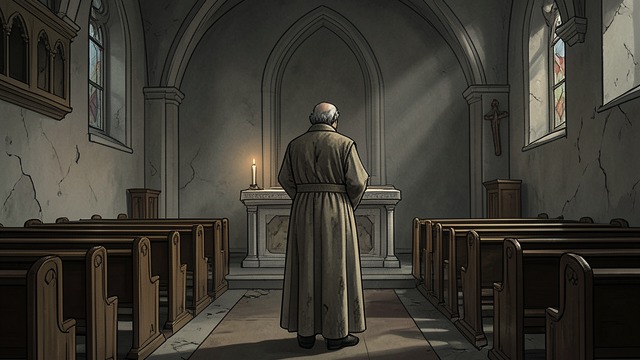
Ferro’s Empty Mountain
A parish without people
Ferro remains in an isolated parish as its elderly congregation disappears. His ministry continues even as the community that gave it form dwindles to nothing.
Solitude turned into care
The experience leaves him doubtful about divine response but committed to accompanying the dying. In Seville, he continues to see a parish as a refuge for others facing the same emptiness.
A Moment of Fellowship
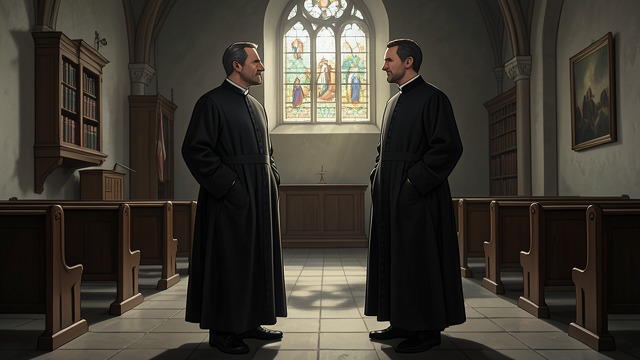
A Moment of Fellowship
Two solitary priests
Quart and Ferro recognize each other as men who serve institutions while doubting some of their promises. Their histories and temperaments differ, but both know what it means to keep going without certainty.
Companionship without rescue
Their solidarity cannot prevent Ferro’s arrest or Quart’s exile. It gives them a brief acknowledgment that a person need not face every uncertainty entirely alone.
Quart’s childhood after his father’s death
after Gris’s religious crisis in Santa Barbara
after her return to Casa del Postigo
after the death of his last mountain parishioner
after Quart and Ferro discuss the stars
